
It is easy to assume that stronger sensation means better results. Many people arrive at fascia release with that habit already built in: if it hurts, it must be working.
SloFlow™ begins from a different understanding. The body changes more easily when it is not defending itself.
Bracing can block release
If pressure feels too intense, your nervous system may tighten around it. Muscles grip, breath shortens, and the body prepares to protect. That protective response is intelligent, but it is not the same as release.
Slow gives the body time
When you move slowly, you can notice the difference between useful sensation and too much. You can adjust before the body has to shout. You can breathe into an area instead of pushing past it.
This is why SloFlow™ uses settling, sensing and softening. The rhythm is part of the method.
The goal is not to win against tension. The goal is to create the conditions where tension no longer needs to hold so tightly.
Stillness is active
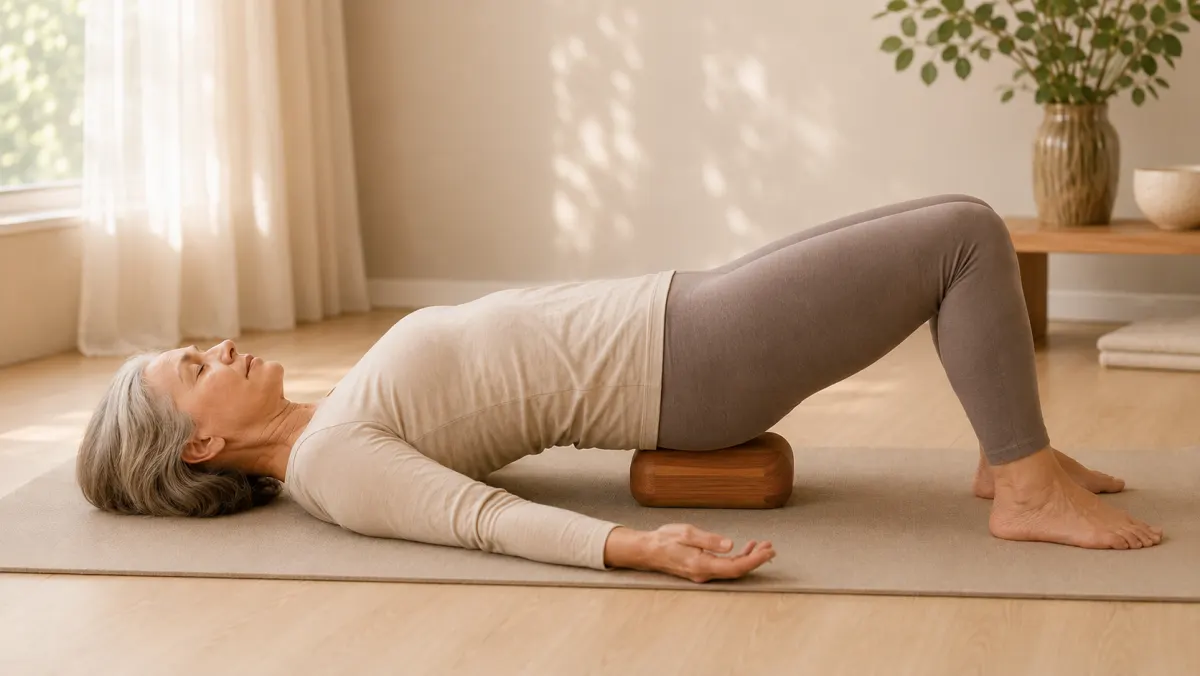
Resting on the block may look like doing nothing, but inside the body there is a lot happening. Breath shifts. Awareness deepens. The nervous system gathers new information. Fascia has time to respond to steady pressure.
How to know you are going slowly enough
Your breath should be available. Your jaw and shoulders should be able to soften. You should feel present rather than trapped. If you notice yourself gripping, holding your breath, or counting the seconds until it is over, soften the position.
Why intensity is not the same as depth
Strong sensation can feel convincing, but depth is not measured by how much you can tolerate. In SloFlow™, depth comes from the body staying present long enough to reorganise. A gentler position that lets you breathe can often create more useful change than a difficult position you have to endure.
This is especially important for people who already live with chronic tension, stress, poor sleep, or protective movement patterns. The practice is not trying to win a battle with the body. It is trying to give the body a different experience.
How to practise slow fascia release at home
Choose one class or one area of the body. Give yourself enough time to settle. Use the cedar block, padding, or a towel in a way that keeps sensation manageable. Breathe gently, notice what changes, and stop before your body feels flooded.
Slower is not a compromise. For many bodies, slower is the way in.