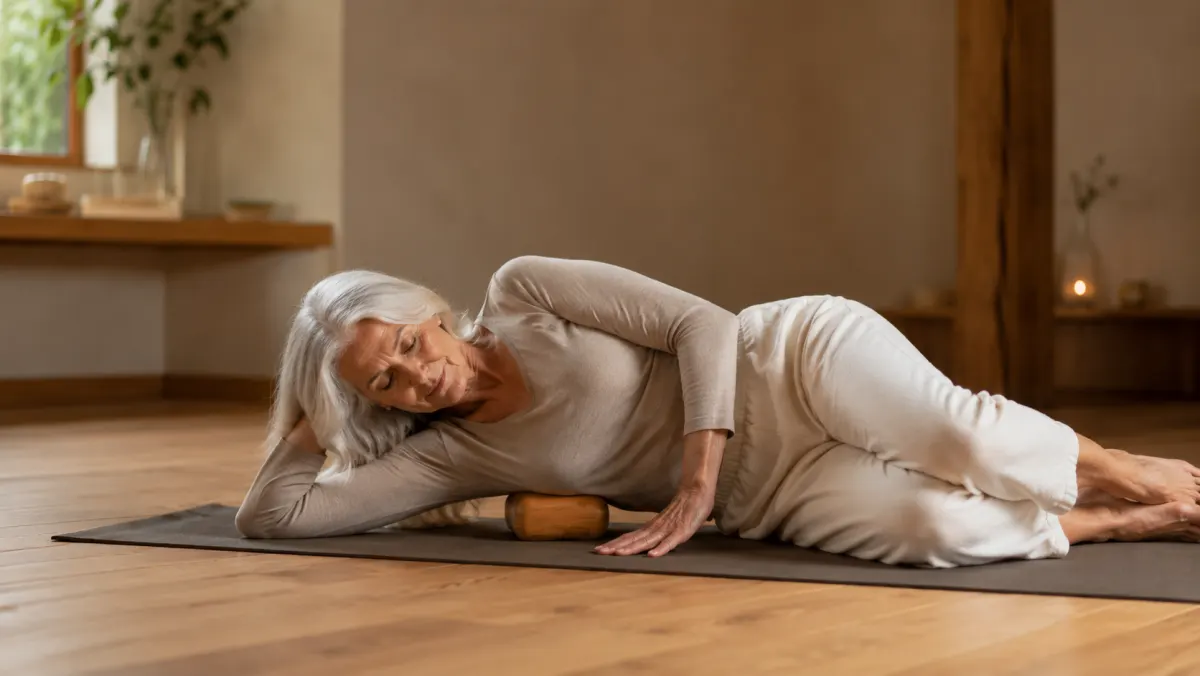
That support might look like a cedar block under the ribs. It might look like a long, steady breath. It might look like someone saying, "go gently here", when every old habit wants to push through.
SloFlow™ was built from that same place — combining Helen's experience with fascia release and the cedar block with the somatic education principles Heidi brought to the practice.
It was not a move away from fascia release. It was a move deeper into it.
The work was changing before the name changed
When we first began teaching Block Therapy, the block was the doorway. Students came because they were stiff, sore, curious, tired of trying everything, or quietly hoping there was still a way to feel better in their bodies.
The cedar block gave people something practical. It helped them meet areas of compression and tension that movement alone often could not reach. With gravity, breath and time, the body started to soften.
But as the classes evolved, something became very clear.
The release was not only mechanical. It was not only about putting the body into a position and waiting for tissue to change. The nervous system mattered. The pace mattered. The way a person listened to themselves mattered.
Students did better when they felt safe enough to soften.
That understanding became the heart of SloFlow™.
Slower is not weaker. Slower gives the body time to notice, respond and release without bracing.
A hybrid practice
Around the same time, Heidi was deep in her own training in somatic education — work rooted in the study of pandiculation and nervous-system-led movement. The two of us found that these principles and the cedar block practice belonged together: the block gives the body a clear, physical place to work, and somatic principles give the nervous system permission to actually let go.
SloFlow™ is a hybrid of these two things. It is not simply a softer version of one method — it combines fascia work with a somatic approach to how the brain and nervous system regulate tension, so the two support each other. That combination is what makes SloFlow™ its own practice.
Why slower became central
Many of us have been taught to work harder when we want a result. Stretch further. Hold longer. Push past discomfort. Be disciplined enough to override the body.
SloFlow™ takes a different approach.
In SloFlow™, slower gives fascia time to soften. It gives breath time to deepen. It gives the nervous system a chance to recognise that nothing has to be forced.
This is especially important for people living with chronic tension, pain, stress, injury history, ageing bodies, or years of feeling disconnected from themselves. A body that has learned to protect itself rarely lets go because it is being pushed. More often, it lets go when it feels met.
That is why each SloFlow™ session is built around three simple principles:
- Settle into stillness and breath
- Sense what is happening in the body
- Soften rather than strain
The practice is still active. It still asks for attention. But the effort is quieter.
The block is still part of the story
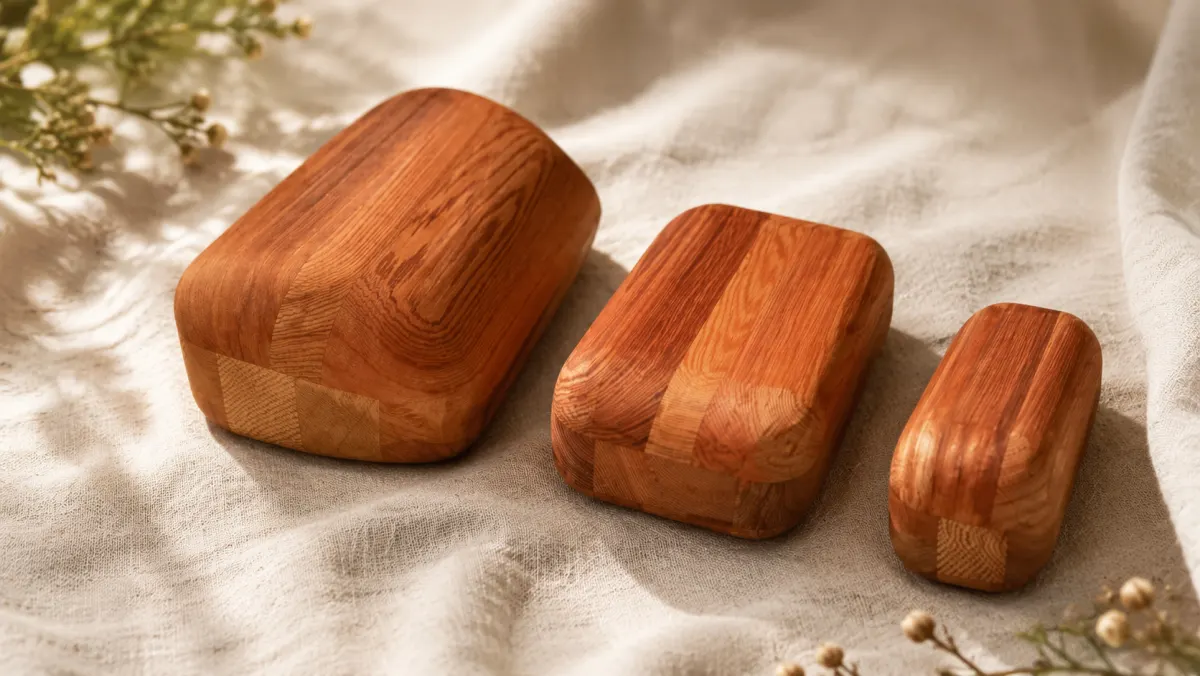
SloFlow™ continues to use hand-finished cedar blocks because they offer something uniquely useful: steady support.
When the body rests on the block, gravity can do work that muscular effort often cannot. The block helps create a focused point of contact. Breath helps the body stay present with that contact. Slow movement helps the release become integrated rather than overwhelming.
The block is not there to bully the body into change. It is there to offer a clear, grounded place to begin.
For some people that might mean the regular block, which is still the most versatile starting point. For others it may mean the little block for more sensitive areas, including the face, neck, jaw and sternum.
The Slope block became a tool we love because it gives the body another way in. Its angled surface lets us work with direction, gravity and subtle positioning rather than simply adding more pressure. That can be especially useful around the abdomen, diaphragm, hips, psoas, IT band and rib work, where a small change of angle can make the contact feel more precise and more supported. The same angle also fits neatly along the jawline, helping us work gently with the fascia in this region and support a stronger, more lifted feeling through the jaw and lower face.
That is the heart of why we still love the tools. The blocks are simple, but they give the body clear feedback. They help us slow down, feel where we are holding, and choose the amount of support that makes release possible. The right tool depends on the person, the area of the body, and the kind of support needed that day.
A practice for real bodies
SloFlow™ was created for people who do not need another performance space.
You do not need to be flexible. You do not need to know anatomy. You do not need to be young, strong, coordinated or already calm. You can arrive with everyday aches, old injuries, a nervous system that has had enough, or a body you are still learning how to trust.
The practice meets you there.
This is part of why the community matters so much. The live classes, recorded library, monthly programs and support calls create a place where people can keep showing up without feeling judged. There is room for questions. There is room for adjustment. There is room to laugh, rest and learn.
That sense of belonging is not separate from the method. It is part of what helps people stay consistent long enough to notice change.
What changed, and what stayed the same
What stayed the same is our love of fascia release, breath, alignment, and the cedar block as a practical tool for change.
What changed is the language, the rhythm, and the addition of somatic education principles that Heidi brought to the work.
SloFlow™ gives a name to what Helen and Heidi built together: a hybrid practice that is slower, more somatic, more nervous-system-aware, and more accessible for the people we most love to teach.
It honours Helen's early experience with fascia release, combined with what Heidi brought from her own training in somatic education, to make space for what they have learned together through thousands of classes and countless student experiences.
Coming home to the body
At its simplest, SloFlow™ is an invitation to feel at home in your body again.
Not by fixing yourself. Not by forcing yourself. But by learning how to listen, breathe, settle, sense and soften.
That is why we became SloFlow™. Because the deeper we went into this work, the more we saw that the body does not need to be conquered. It needs to feel safe enough to return to itself.